Two people stand in the same storm. One goes quiet, assesses, and moves. The other unravels, reacts, and regrets. The difference is rarely intelligence or talent. It is something quieter and more trainable: identity stability.
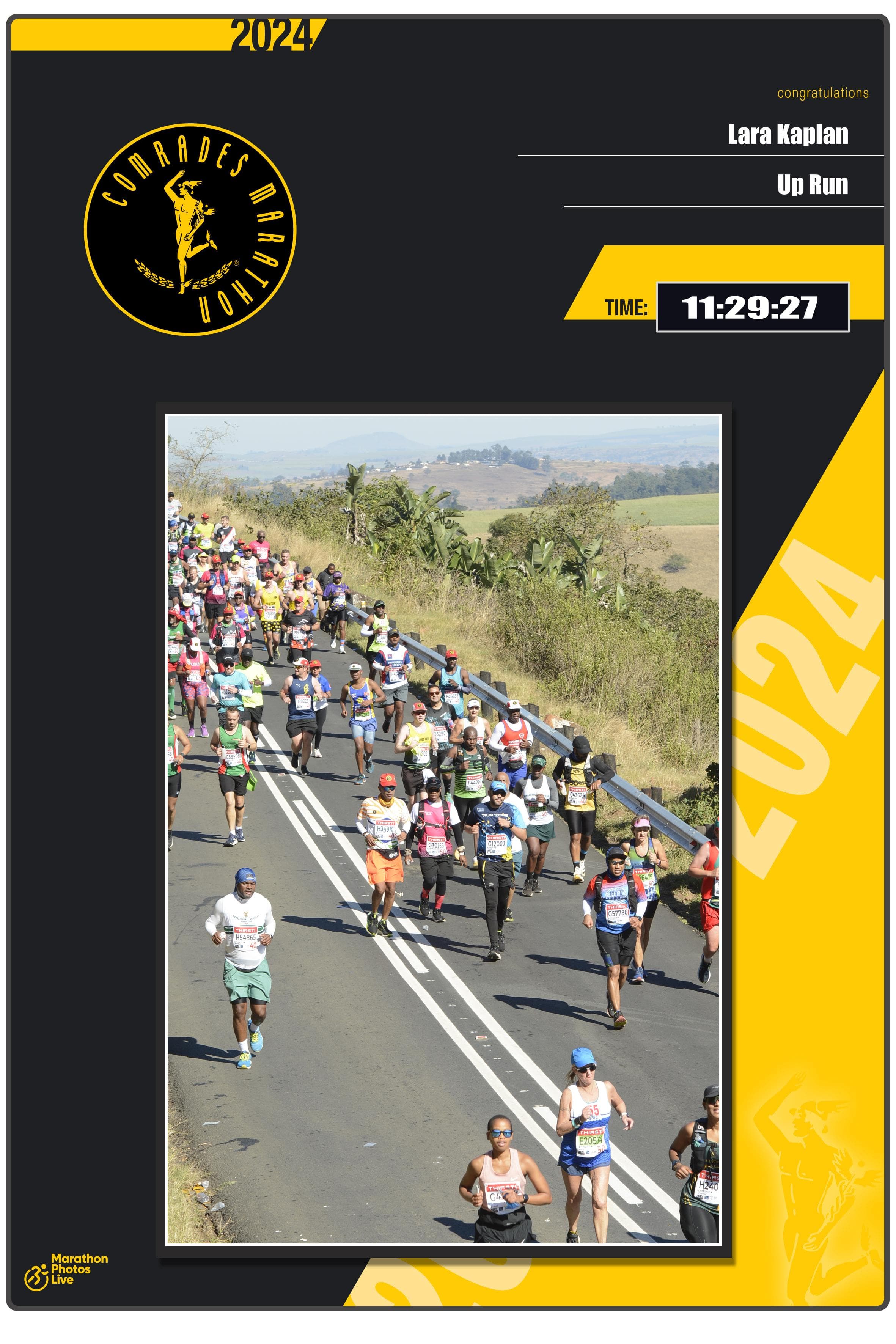
For forty years, I have studied this difference from the inside — across 142+ marathons and 20 Comrades finishes. I have watched athletes, founders, and executives face pressure that would justify collapse. The ones who held their line did not have less fear. They had a stable reference point that fear could not erase.
This article looks at identity stability through the lens of neuroscience: what happens in the brain at the breaking point, why our wiring tries to undermine us, and how you can train the neurological foundation of keeping your head.
What the brain does under pressure
When pressure spikes, your nervous system activates the sympathetic branch of the stress response. The amygdala — the brain's threat-detection centre — flags the situation as dangerous. Cortisol and adrenaline flood the system. Your body prepares for a fight, flight, or freeze response.
Here is what matters: during this response, the prefrontal cortex — the region responsible for reasoning, planning, and self-control — receives reduced resources. The brain literally prioritises survival over strategy. You become faster to react and slower to think.
This is not a design flaw. It kept our ancestors alive. But it is disastrous for modern decision making. A leader facing a hostile board, a founder watching a deal collapse, an athlete at kilometer 70 of a 90km race — all of them are fighting the same neurological downgrade. The pressure does not just make things harder. It physically reduces your capacity for the kind of thinking the moment demands.
The problem with improvisation under threat
Most people's default approach to pressure is improvisation. They assume that when the moment arrives, they will think their way through it. Neuroscience says otherwise.
When the stress response is active, the prefrontal cortex is compromised. The brain does not have the bandwidth for nuanced, reasoned, improvised decisions. It falls back on patterns. On habit. On whatever is most familiar.
This is why the breaking point is so dangerous. The decision that matters most is the decision you are least equipped to make well — because your brain has just downgraded the exact capacity you need.
The solution is not to try harder. It is to decide in advance.
What identity stability actually is
Identity stability is the ability to maintain a consistent self-narrative — a stable answer to "who am I and what am I building?" — even when everything else is in flux. It functions as a reference point that the storm cannot move.
Think of it as the fixed coordinate on a map. When the fog rolls in and you lose sight of the terrain, you can still navigate if you know exactly where the fixed point sits. Your identity contract is that fixed point.
In practical terms, identity stability means you have already answered the questions the crisis is trying to ask. You have already decided who you are. You have already defined what you are protecting. When pressure arrives, you are not improvising an identity under fire. You are executing one you installed when you were calm.
How pre-installed decisions change the brain
Neuroscience and practical experience converge on the same point: decisions made in advance are decisions the brain can execute under stress, while decisions improvised in the moment are decisions the brain will sabotage.
When you pre-install a decision rule — "if X happens, I will do Y" — you create a path the brain can follow even when the prefrontal cortex is compromised. The decision does not require reasoning. It requires recognition and execution.
This is why I built the decision architecture on the Cape Town Cycle Tour the way I did. When control matters most, you cannot rely on the part of the brain that vanishes under stress. You rely on the part that remains: the installed system.
Emotional control without suppression
A common misunderstanding is that identity stability means suppressing emotion. It does not. Suppression is pushing the feeling away and hoping it does not leak out. Identity stability is different: it is feeling the full force of the emotion and still having a reference point that the emotion cannot overwrite.
The fear is present. The fear is acknowledged. But the decision comes from the identity, not from the fear. That distinction is everything.
How to train identity stability
Like any skill, identity stability is built through repetition and structure. Four practices move it from concept to capacity.
1. Write your identity contract
Define who you are when everything else is stripped away. Your non-negotiable anchors. The identity you will not compromise under pressure. Written down, calm, and specific.
2. Pre-install decision rules
For the predictable pressures of your life, decide in advance. If the deal collapses, I will do X. If the quarter turns, I will do Y. The rule is not a hope; it is a commitment made while your prefrontal cortex was fully online.
3. Rehearse under simulated pressure
High performers test their systems before the real moment. This is the same principle that makes adaptability training in unfamiliar conditions so powerful: you teach the brain that the system works even when conditions are strange.
4. Review your arc regularly
What is not reviewed will drift. A monthly check — "am I still protecting the trajectory I committed to?" — keeps the reference point sharp so it is ready when you need it.
The two-track system in your head
To understand identity stability, you need to understand the two systems competing for control of your behaviour: the fast, emotional system and the slow, reasoning system.
The fast system is older, faster, and louder. It operates through the amygdala and the structures of the limbic brain. It reacts in milliseconds, before you have consciously registered the situation. Its job is survival — it assumes danger and responds accordingly.
The slow system is newer and more sophisticated. It runs through the prefrontal cortex and governs reasoning, planning, and self-control. It is deliberate, accurate, and slow. It is also the first thing to be downgraded when the fast system takes over.
This is the neurological truth behind every "I knew I should have done X, but I did Y instead" moment. The fast system did not wait for the slow system's permission. Under pressure, the slow system is not just slow — it is suppressed. You are literally running on a reduced reasoning capacity at the exact moment you need the most of it.
Why willpower is a losing strategy
If you have ever relied on willpower to get through a crisis, you already know its ceiling. Willpower is a resource, and it is finite. When you are depleted, stressed, and under pressure, the resource is already half-empty before the test begins.
The neuroscience makes this precise. Cognitive control is metabolically expensive. When the stress response is active, the brain prioritises the survival systems and allocates fewer resources to the control systems. Your willpower does not weaken because you are lazy. It weakens because your brain has decided that reasoned self-control is lower priority than threat response.
This is why the answer to pressure is never "try harder." Trying harder spends the exact resource that pressure depletes. The answer is architecture: decisions made in advance, systems installed when resources were plentiful, habits that do not require willpower to execute.
The role of cortisol
Cortisol, the primary stress hormone, plays a central role. In short bursts it sharpens attention. Over prolonged periods it degrades the hippocampus — the region involved in memory and context — and keeps the amygdala in a state of heightened alertness. The result is that chronic pressure literally changes the brain's baseline: you become faster to perceive threat and slower to recover from it.
None of this is a character judgement. It is biology, and it is knowable. And what is knowable is manageable.
Identity as a stabilising system
Identity stability is best understood as a stabilising system that sits above the two-track competition. When your identity is stable, the fast system can fire — the fear, the adrenaline, the instinct — without hijacking the outcome. The slow system may be suppressed, but it does not need to be fully online, because the critical decisions were already made.
Think of it as the difference between a ship navigating by the stars and a ship navigating by a fixed buoy. The stars require constant reading, interpretation, and judgment — the slow system, under stress. The buoy requires one reference point, fixed in advance, that does not move no matter what the storm does.
The identity contract is that buoy. It is fixed, it is known, and it was placed in calm conditions. When the fast system is screaming and the slow system is suppressed, the buoy is still there.
How the identity contract changes your brain
Here is the encouraging part: because the brain is adaptive, installing an identity contract actually changes how it responds to pressure. This is the principle of neuroplasticity applied to decision making.
When you rehearse a response repeatedly — "if X, then Y" — the brain builds a pathway for that response. Under stress, the brain defaults to pathways. It does not improvise new behaviour; it executes the strongest existing pattern. If you have rehearsed the identity-aligned response a hundred times in calm conditions, that is the pattern the brain will execute under fire.
This is the neurological foundation of everything I have written about adaptability under unfamiliar conditions. The swim-run taught me that the brain can be trained to stay functional even when everything is "wrong" — swimming in running shoes, running in a wetsuit — precisely because the underlying system had been built through rehearsal.
The three pillars of trained stability
Put the neuroscience into practice and you get three pillars. Together they form a stability system that works regardless of what the day throws at you.
Pillar 1: A defined reference point
The identity contract, written down and specific. Not "I am resilient" but "I am the person who protects my three-year arc by never making major decisions in the first 48 hours of a crisis." Specific, testable, and fixed.
Pillar 2: Rehearsed responses
Decision rules practised in advance, so the brain builds the pathways. The rule is not a hope; it is a conditioned response, ready to fire when the stress system activates.
Pillar 3: Recovery capacity
The brain needs to return to baseline between stressors. Sleep, recovery, and deliberate calm are not optional extras. They are the maintenance that keeps the whole system functional. A chronically depleted brain cannot hold identity stability, no matter how well the contract is written.
These three pillars are why the Kilometer 70 Method is structured the way it is: it builds the reference point, installs the decision rules, and protects the recovery capacity — so that the neuroscience works for you rather than against you.
Why this matters more than talent
Talent gets you to the start line. Identity stability gets you through the moment that separates people. Every high performer I have ever met has had moments where talent was irrelevant and only the installed system remained.
The good news is that this is not a fixed trait. It is architecture. And architecture can be built.
Find your own reference point
You cannot install identity stability in the middle of the storm. You build it in advance — which means the time to start is now, not when the pressure arrives.
The free Breaking Point Diagnostic is the first structured step: it walks you through naming your arc, isolating your real disruption, identifying the emotional distortions filtering your perception, and calculating the true cost of your next decision. It is the calm-room version of the skill you will need in the storm.
Frequently Asked Questions
What is identity stability in neuroscience?
Identity stability is the brain's ability to maintain a consistent self-narrative — a stable reference point for decisions — even when the amygdala and stress systems are highly activated. It is the neurological basis of keeping your head when it matters.
Can identity stability be trained?
Yes. Identity stability is built through pre-installed decision rules, rehearsed responses, and a clearly defined identity contract. When you have made the decision in advance, your brain does not have to improvise under threat.
Why do I make worse decisions when stressed?
Under stress, the amygdala activates and the prefrontal cortex — responsible for reasoning and self-control — is partially suppressed. This shifts you toward reactive, threat-based decision making. Training identity stability counteracts this.
How is identity stability different from emotional suppression?
Suppression is pushing feelings away and hoping they don't affect you. Identity stability is installing a clear reference point — who you are and what you are protecting — so that you can feel the emotion and still make the right decision.
Free Diagnostic Workbook
Find your breaking point before it breaks you.
Take the free 4-step Breaking Point Diagnostic from Lara Kaplan. In under an hour you'll name your long-term arc, isolate your real disruption from mere discomfort, and calculate the true cost of stopping vs. continuing.
Lara Kaplan
Kilometer 70 Blog™
Back to Blogs