Every leader I know has stood in front of a situation that looked like an existential crisis — and was actually just exhaustion with a meeting attached to it. The reverse is equally common and far more costly: dismissing a genuine threat as a bad day.
After decades of high-stakes endurance and working with performers at the sharp end, I can tell you the single most valuable leadership skill at the breaking point is classification. The ability to answer one question correctly: is this real disruption, or is this decision fatigue?
Get that wrong, and every mistake that follows is downstream of it. Get it right, and you can act with a clarity most leaders never experience. This article gives you the framework.
The problem with treating everything as a crisis
Modern leadership runs on attention, and attention is finite. Every time you treat a routine problem as an emergency, you spend the one resource you cannot replace: your capacity to think clearly when it truly matters.
There is a measurable cost to this. Research on decision fatigue shows that the quality of decisions declines steadily over a period of sustained choice-making. The leader who has spent all day making calls will, by late afternoon, misjudge the very thing that would have been obvious in the morning.
This is not a character flaw. It is a neurological pattern. And the first step to defeating it is understanding exactly how it shows up.
What decision fatigue actually does to you
Decision fatigue is not the same as being tired. It is a specific degradation of judgment under accumulated cognitive load. Its signature effects are consistent:
- Threat amplification. Problems look bigger and more dangerous than they are.
- Time distortion. Everything feels urgent, so prioritisation collapses.
- Loss aversion. The cost of acting feels higher, so inaction creeps in.
- Reactivity. You respond to the loudest input rather than the most important one.
Notice what all four have in common: they make routine problems look like breaking points. That is why the breaking point is such a useful concept. It gives you a standard to measure against. The question is not "is this hard?" — the question is "is my long-term trajectory actually threatened?"
What real disruption looks like
Real disruption is rare, and it has a different shape. It is not loud; it is structural. It is the moment where the thing you are building is genuinely at risk — the strategy is failing, the market has shifted, the relationship that underpinned your position is gone.
I have seen this shape up close. In the moment I was chased by an ostrich at 50km/h, I had to decide, in seconds, whether my training route was genuinely unsafe or merely uncomfortable. The threat was real: a fast-moving animal actively trying to pull me off the bike. That was real disruption, and the correct response was a genuine Plan B.
The difference between that and ordinary difficulty is the same difference leaders need to see every week: real disruption threatens the arc. Fatigue threatens your perception.
A three-question test for the moment
When a situation arrives at full speed, work these three questions before you commit to a response.
1. Is the trajectory actually at risk?
Not "could it be at risk in some future scenario." Right now, is the thing you are building — your three-year arc, your core contract — genuinely threatened? If the arc is intact, this is not a breaking point.
2. Am I capable of judging this right now?
Be honest about your own state. Have you made forty decisions today? Are you tired? Hungry? Reactive? If your judgment is degraded, your classification of the problem is untrustworthy — regardless of how urgent it feels.
3. What would I do if I were fresh?
This is the closest thing to a time machine a leader has. Imagine tomorrow morning, rested, having slept on it. What would the decision be? That answer is usually the right one. Write it down, then make it.
These three questions are simple. They are also the difference between a stratosphere of belief and a spiral of reactivity.
The discipline of pre-installed rules
The leaders who navigate disruption best do not improvise their way through it. They have pre-installed decision rules that activate when judgment is compromised.
For example: "If a single bad quarter causes me to consider abandoning a three-year strategy, I will not make that decision on the day I learn the numbers." A rule like that is not wisdom — it is architecture. It protects you from the version of yourself that exists at 4pm on a bad day.
This is exactly the mechanism behind the self-control architecture of the Cape Town Cycle Tour: 109km of a race where one millimetre of drift is the difference between staying on the line and going down. You do not decide to hold your line in the middle of the descent. You install the rule before the race begins.
The cost of getting it wrong
Before the framework, it is worth making the stakes explicit. Both failure modes are expensive, and they are expensive in opposite directions.
The first failure mode is treating fatigue as crisis. The leader who escalates every difficult stretch into an emergency spends their team's energy, destroys trust in their judgement, and — critically — makes real crises harder to spot. When everything is red, nothing is red. The organisation learns that the alarm is noise, and when the real alarm comes, nobody moves.
The second failure mode is treating real disruption as fatigue. This is the quieter, more dangerous one. A genuine threat to the trajectory is minimised, rationalised, and deferred — because it arrived on a day when the leader was exhausted and defaulted to "I'll assess it when I'm fresh." By the time the fresh assessment happens, the disruption has grown.
Both failures share one root cause: the classification happened in a degraded state. Which is exactly why the first move of the framework is not to classify at all — it is to check the state of the classifier.
The hidden variable: state before problem
Here is the most useful insight from studying high performers under pressure: the state of the decision-maker matters more than the size of the problem. The same 20% revenue drop is a manageable setback for a fresh, stable leader and an existential threat for an exhausted, reactive one.
This is why the first two questions of the test are not about the problem at all. They are about the trajectory and the state. Only after those are answered honestly does the problem itself get assessed.
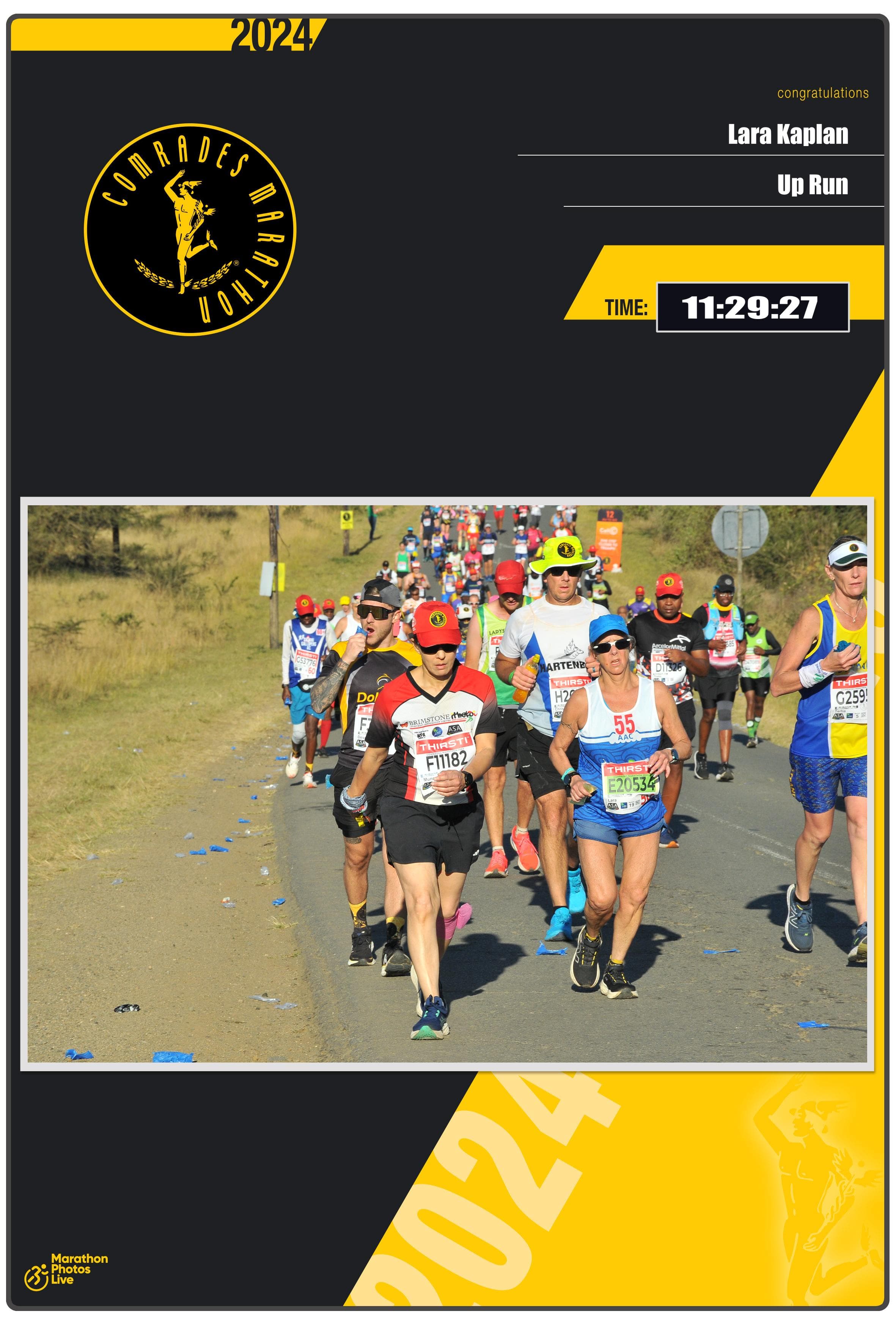
In the 2022 Comrades, where I broke my foot at kilometer 10, the state check was brutal and honest. I was 54, I had trained for three years through a pandemic, and the injury was serious. The decision to continue was not optimism — it was a calculation made by a clear head that had done the cost analysis. The decision to go on came from the same framework that would later let me decide correctly in the Voet of Africa, where I quit to save my life. Different outcomes. Same framework. State checked, trajectory checked, then decision.
A field guide to common misclassifications
Most misclassifications are not random; they follow recurring patterns. Naming them makes them easier to catch.
- The 4pm flip. The same situation that looked manageable at 9am looks catastrophic at 4pm. The problem did not change; the state did. Classic decision fatigue.
- The inbox ambush. A single loud, angry message makes a routine issue feel like a crisis. The volume of the input is mistaken for the importance of the issue.
- The streak defence. "We have always done it this way, and changing now would break our run." The cost of stopping is exaggerated to protect an identity that was never actually threatened.
- The new-shiny spiral. A genuinely novel challenge is automatically treated as disruption — when novelty is not the same as threat. New is not the same as dangerous.
- The delegation trap. A real disruption is passed down or delayed because surfacing it feels like admitting failure. The cost of delay compounds quietly.
If you recognise yourself in any of these, you are in good company. The difference between a good leader and a reactive one is not that the good leader never misclassifies. It is that they have a system for catching it.
Building the classification habit
Classification is a habit, and habits are built deliberately. Three practices will move it from theory to reflex.
Practice 1: A forced pause on big decisions
Install a rule: no major decision made on the day it surfaces. The 48-hour rule — state it, document it, decide on it after the pause — breaks the fast system's monopoly. The urgent thing and the important thing are rarely the same thing.
Practice 2: Decision journaling
Keep a log of decisions made under pressure: what the situation was, what state you were in, what you decided. Review it monthly. Patterns appear that are invisible in the moment — the 4pm flips, the streak defences, the situations you consistently over- or under-weight.
Practice 3: A pre-mortem before commitment
Before committing to a major response, spend ten minutes assuming it fails. What happened? Which of your assumptions were wrong? The pre-mortem is not pessimism; it is the discipline of finding the fracture points before they break.
These practices are the same muscle as the five decision-making frameworks — architecture over improvisation, installed while calm.
When the disruption is real
If the three-question test says the disruption is real, the move is different. Now you are not managing perception; you are managing reality. This is where the three-part method becomes essential:
- Diagnose the exact point of threat — not the noise around it.
- Stabilise by returning to identity: who are you, and what are you protecting?
- Reframe the pain as data — what does this disruption tell you that you did not know?
Real disruption demands real decisions. The framework does not make the decision for you. It makes the decision possible by clearing away everything that is not actually at stake.
Your classification skill starts now
You cannot learn to classify disruption in the middle of a crisis. Like every skill in this system, it is built in advance, when the stakes are lower and the thinking is clear.
The free Breaking Point Diagnostic trains exactly this muscle. Step by step it walks you through naming your long-term arc, isolating your real disruption from mere discomfort, identifying the emotional distortions in your perception, and calculating the true cost of the decision. When the real test comes, you will already know the difference between noise and threat.
Frequently Asked Questions
What is decision fatigue?
Decision fatigue is the progressive deterioration of decision quality after an extended period of making decisions. As cognitive resources deplete, leaders default to reactive, low-quality choices — and begin to misclassify routine problems as existential crises.
How do I know if a problem is real disruption or just fatigue?
Ask one question: is your long-term trajectory genuinely threatened, or is the situation merely difficult? Real disruption threatens the arc. Fatigue makes everything look like it does. Diagnosis separates the two.
Why do exhausted leaders overreact?
Under fatigue, the brain conserves resources and amplifies perceived threat. The amygdala becomes more active and the prefrontal cortex — responsible for measured reasoning — becomes less so. Everything looks more dangerous, and urgent, than it is.
What should a leader do when too fatigued to decide?
Stop deciding. Escalate only what is truly time-critical, delegate what can wait, and use pre-installed decision rules for anything predictable. The discipline is knowing when your own judgment is degraded and acting on that knowledge.
Free Diagnostic Workbook
Find your breaking point before it breaks you.
Take the free 4-step Breaking Point Diagnostic from Lara Kaplan. In under an hour you'll name your long-term arc, isolate your real disruption from mere discomfort, and calculate the true cost of stopping vs. continuing.
Lara Kaplan
Kilometer 70 Blog™
Back to Blogs